Global Sourcing in Supply Chain Management: How NetSuite SCM Simplifies Complexity



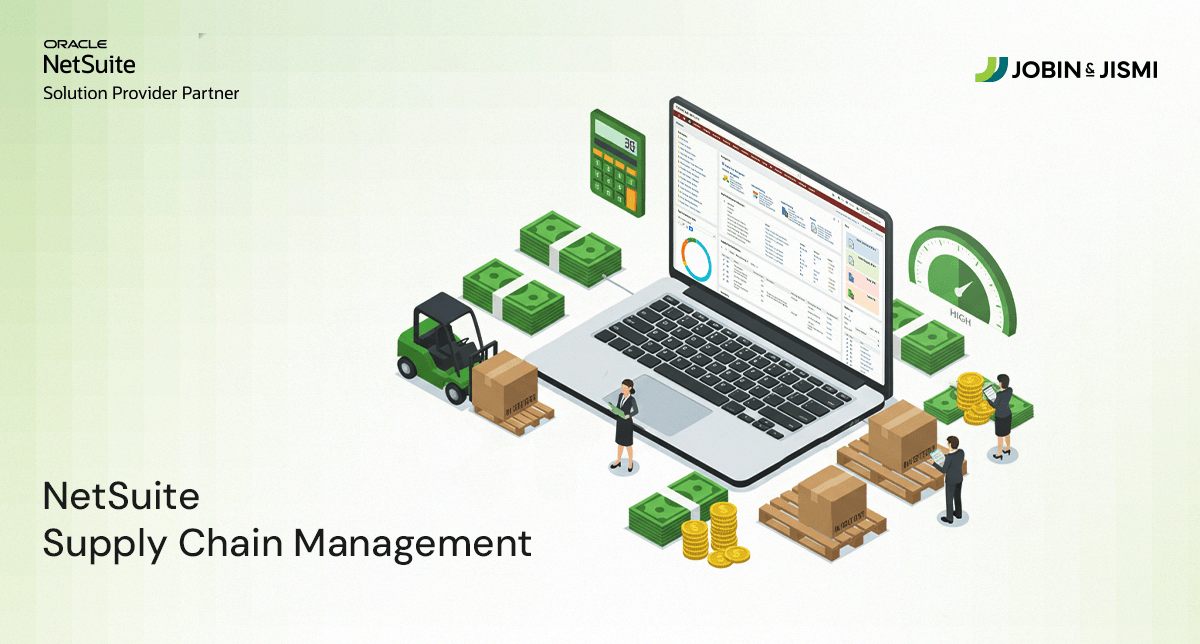
Global sourcing used to be a straightforward process. You picked a supplier, worked out the price, and kept things moving. That’s not how it works anymore. Supply chains now deal with shifting demand, longer lead times, unstable markets, and risks that come out of nowhere.
Because of that, many companies are rethinking how they source and manage materials. A NetSuite study even mentioned that 57% of businesses planned big changes to their supply chains in 2025, mostly because the old way of doing things isn’t holding up.
This is where NetSuite’s supply chain tools help. Instead of jumping between spreadsheets, scattered emails, and disconnected systems, teams get one place to plan, track, and coordinate everything tied to global sourcing.
In this article, we’ll look at what global sourcing really means, why it tends to get complicated fast, and how NetSuite makes the entire process easier to control.
What is Global Sourcing?
Global sourcing is simply the practice of finding and working with suppliers outside your home country. Businesses do this to get better pricing, access scarce materials, or tap into skills they don’t have locally. Over the years, companies relied heavily on the China-first model, but that has changed. Now sourcing is spread across several regions to reduce risk and avoid disruptions.
It is also different from outsourcing. Outsourcing involves handing over an entire process or function to another company. Global sourcing is more focused on picking the right partners for materials, components, or services, no matter where they are located.
Recent trends show how much things have shifted. According to NetSuite, 41 percent of production is moving onshore, 22 percent nearshore, and 37 percent offshore. This mix gives companies more flexibility and helps them avoid being dependent on a single region.
What are the Benefits of Global Sourcing?
The following are the benefits of global sourcing:
Cost Optimization
One of the biggest advantages is cost. Producing goods or buying materials from certain regions can be far cheaper than doing the same work at home. Companies also benefit from economies of scale and access to labor or raw materials that cost less without lowering quality.
Strategic Advantages
Working with suppliers in different regions gives companies more flexibility. The advantage is, you can shift production to another location if it slows down in one location. It also gives the added benefit of getting access to materials or resources not available locally.
Global sourcing also supports growth in less obvious ways. Working with suppliers in different countries exposes them to new customer trends and opens the door to fresh markets, which often leads to a stronger competitive position.
Increased Supplier Network
Having more than one supplier is a simple way to reduce risk. With global sourcing, companies can turn to another vendor if a shipment is delayed, a facility shuts down, or political issues disrupt normal routes. Having more than one reliable supplier makes the entire operation more resilient. If something changes suddenly, you can shift to another source and keep things moving without disruption.
What are the Challenges in Global Sourcing?
The following are the challenges in global sourcing:
Operational Complexities
Operational complexities show up quickly when sourcing across borders. Lead times differ from region to region, communication isn’t always uniform, and coordinating multiple suppliers takes more attention. Quality checks also become tougher when production happens in different locations, and even small delays can slow the entire chain.
Regulatory and Compliance Issues
Every country has its own tax rules, import duties, and product standards. These regulations shift often, which means companies need to keep track of what applies where. There is also the added concern of intellectual property protection and data security when working with partners overseas.
What is Supply Chain Complexity?
Supply chain complexity refers to how many moving parts, partners, and processes a company has to manage from procurement to production and final delivery. As companies expand, they naturally end up working with more suppliers, partners, and service providers. Those connections don’t stay the same for long. Vendors change, customer needs shift, and products often require more specialized components than before. All of this adds new layers that need to work together without slowing the chain down.
Complexity affects more than day-to-day operations. It influences how fast a business can respond to demand, how predictable each product line is, and how well teams can make decisions. When visibility is low, even a simple issue can take longer to understand and fix.
Experts usually group complexity into a few main drivers. They include how the supply chain is structured, how fast things change, internal processes, outside influences, and the flow of information. Each of these plays a part in how easy or difficult it is to keep the supply chain running smoothly.
Challenges NetSuite Supply Chain Management Solves
Here are the challenges NetSuite SCM solves:
Stockouts
A stockout can happen when demand rises or when a supplier runs late. NetSuite shows real-time inventory and warns teams early so they can restock before it affects sales.
Production Delays
Production gets held up when materials don’t show up on time or when no one has a clear view of capacity. NetSuite puts scheduling, planning, and purchasing in one screen to keep production on track.
Inconsistent Quality
Working with suppliers in different regions can sometimes lead to uneven product quality. NetSuite tracks supplier performance, quality checks, and inspection results in one place. Teams can quickly spot trends, resolve issues, and hold vendors accountable.
Core Features and Business Impact of NetSuite SCM
The following are the features and business impact of NetSuite SCM:
Supply Chain Planning and Control Tower
NetSuite gives planners a real-time picture of what’s coming in, what’s going out, and where inventory stands. The Control Tower helps teams notice problems early, whether a shipment is running late or stock levels are starting to fall. With this visibility, teams can act before customers are affected by delays.
Business Impact: Fewer stockouts, less excess inventory, and more consistent service.
Procurement and Vendor Management
NetSuite helps teams manage purchasing without the usual back-and-forth. It keeps approvals organized, tracks orders in real time, and gives a clear view of how each supplier is performing. With this, teams can choose dependable suppliers and avoid last-minute surprises.
Business Impact: Faster purchasing cycles, fewer mistakes, and lower buying costs.
Inventory and Warehouse Management
With real-time tracking, barcode scanning, and lot or serial control, warehouses stay organized and accurate. Staff can pick, pack, and move items without guesswork.
Business Impact: Higher accuracy, fewer mistakes, and more efficient warehouse operations.
Manufacturing and Production Control
NetSuite brings demand forecasts, work orders, and production schedules into one view. This helps manufacturers understand what needs to be produced and when it should be scheduled, giving them a clearer handle on the entire workflow.
Business Impact: Better use of resources, less downtime, and smoother production flow.
Logistics and Fulfilment
NetSuite connects directly with major carriers, compares shipping rates, and automates key fulfilment steps. Teams know where orders stand at any moment.
Business Impact: Lower shipping costs, better delivery accuracy, and improved customer satisfaction.
Analytics and Risk Management
Built-in dashboards show supply, demand, costs, and supplier performance in real-time. Alerts help teams handle compliance issues or risks before they escalate.
Business Impact: More informed decisions, smoother compliance, and fewer unexpected disruptions.
SCM Mobile (NetSuite Mobile)
Mobile tools support warehouse work, manufacturing, shipping, and counting activities directly from handheld devices. Teams can print labels, scan barcodes, and record transactions without going back to a workstation.
Business Impact: Faster workflows, fewer manual steps, and better accuracy across the floor.
Conclusion
Global sourcing opens doors for cost savings and new opportunities, but it also adds work behind the scenes. Lead times shift from region to region, suppliers follow their own schedules, and market conditions change quickly. When these activities aren’t coordinated well, delays become harder to spot early and even harder to control.
NetSuite SCM connects planning, purchasing, inventory, production, and logistics in one system. With everything connected, teams can see changes sooner, understand where problems might show up, and make decisions based on information they can trust, not assumptions.
Businesses that handle supply chain challenges well usually share one thing: they keep improving their processes and rely on data to guide their next steps. NetSuite makes that kind of discipline easier. If your business is struggling with supply chain complexity or trying to improve global sourcing, this is a good moment to see how much NetSuite can simplify.
Want support choosing or implementing NetSuite Supply Chain Management?
Talk to our team and get expert guidance for your next steps.
FAQ
What causes supply chain complexity?
Complexity usually comes from having too many moving parts. More suppliers, more product variations, and more distribution points all add to the load. External factors like market shifts, regulations, and unpredictable demand make it even harder to manage without clear visibility.
How does global sourcing impact supply chain management?
Global sourcing expands your supplier options but also increases the work involved in managing them. Lead times get longer, logistics become trickier, and communication needs to be tighter. When managed well, it brings costs and quality advantages. When managed poorly, it creates delays and gaps in planning.
What is complexity in supply chain management?
It’s the mix of interlinked steps, partners, and processes that must work together for products to move smoothly from supplier to customer. The more connections and dependencies you have, the harder it becomes to control cost, speed, and accuracy.
What are the challenges of global sourcing in the supply chain?
Sourcing from different countries brings a mix of practical hurdles. Shipping takes longer, communication can be tricky, and every region has its own rules to follow. Quality standards also vary from place to place. If these areas aren’t watched closely, they can affect delivery timelines, production schedules, and the overall reliability of the supply chain.
What is SCM in ERP, especially NetSuite SCM?
SCM means Supply Chain Management. In an ERP system like NetSuite, it pulls together planning, purchasing, inventory, production, and fulfillment. Instead of checking different tools for information, teams work from one platform with real-time data. That makes daily decisions quicker and far more accurate.
on LinkedIn