

Auto Invoice Creation from Fulfilment
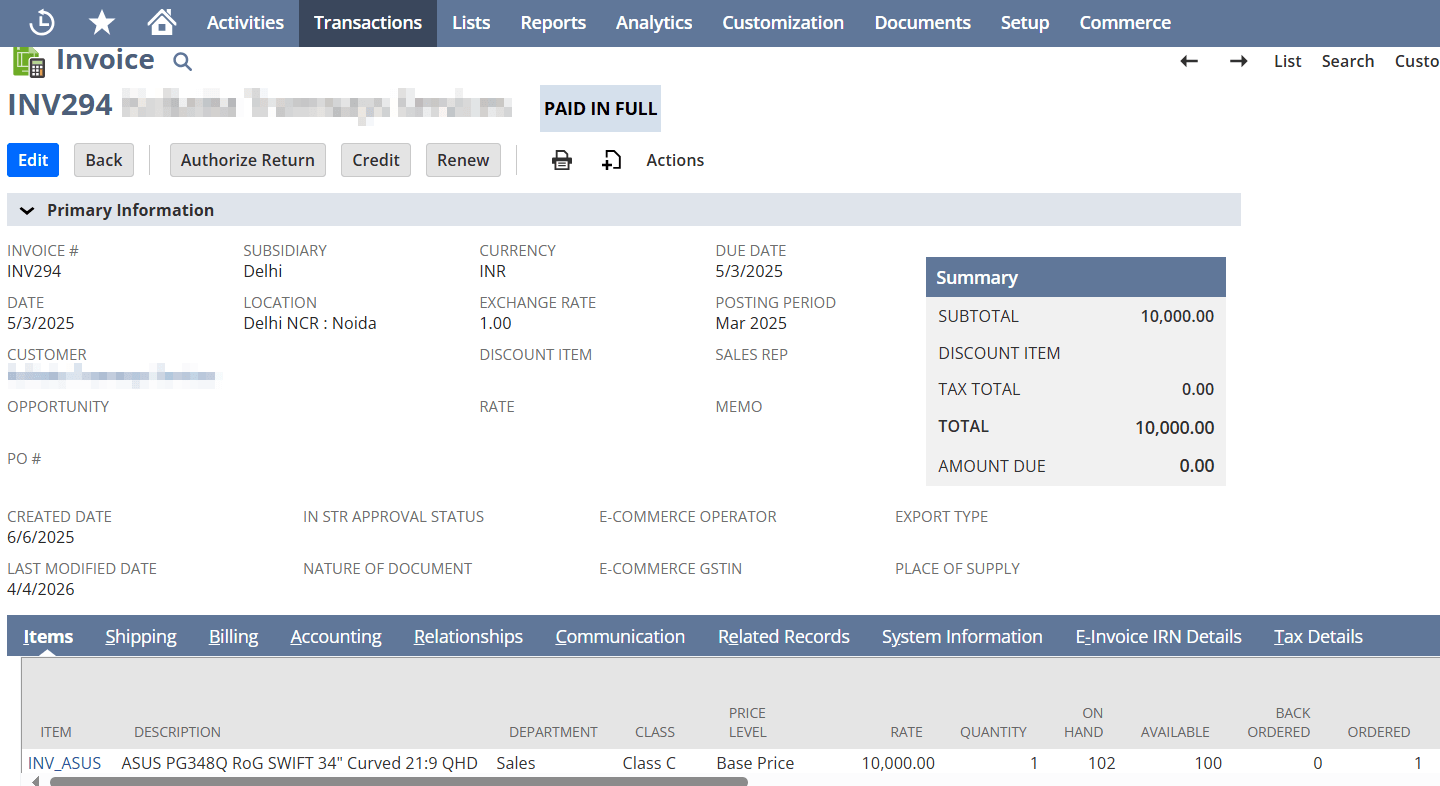
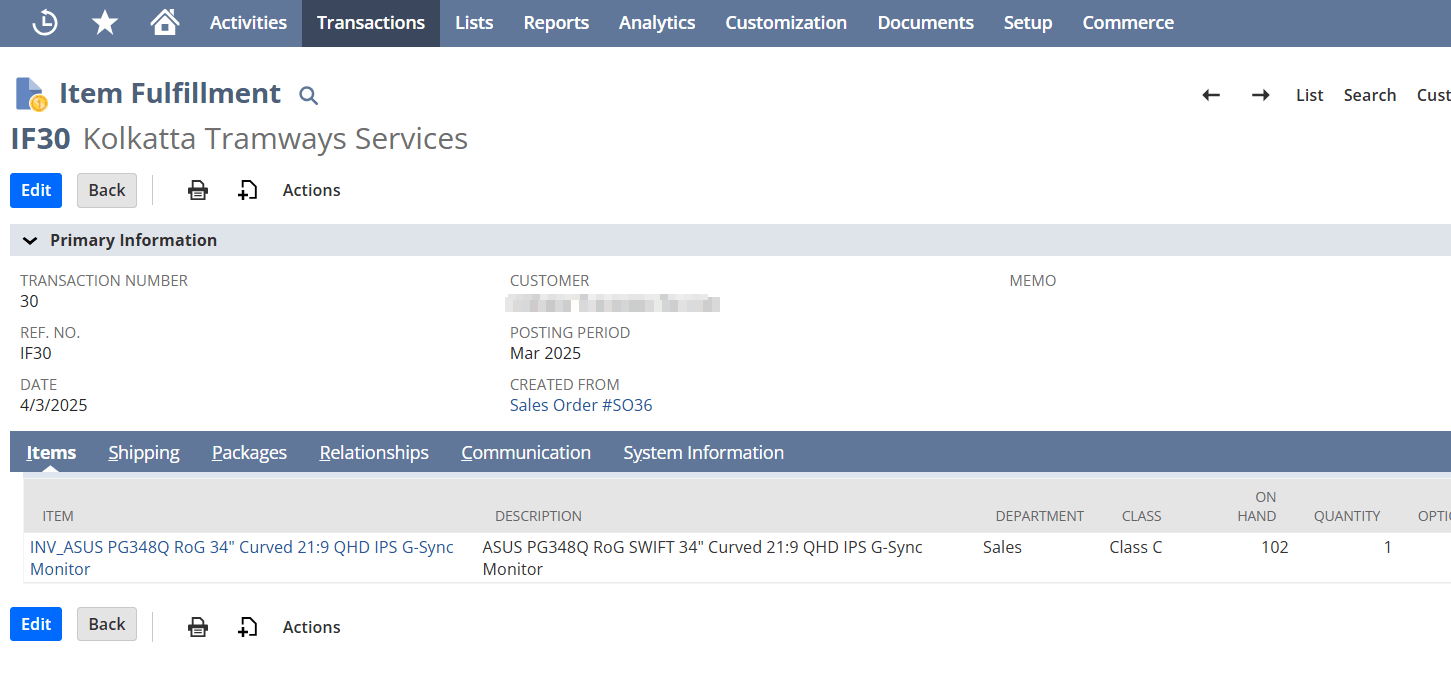
Auto Invoicing automates the creation of invoices in NetSuite by monitoring changes in fulfillment status. Invoices are automatically generated when an order is shipped ensuring billing accuracy and consistency.
- SKU :PDNSFIA01
- Last Update :June 2025
- Support for :NetSuite
- Implementation time :1 Business Day
Auto Invoice Creation from Fulfilment
Dynamic Invoicing Based on Fulfillment Status
Auto Invoicing streamlines invoice management by dynamically responding to fulfillment status updates in NetSuite. When an order is shipped, the solution generates an invoice and sends it via email with a PDF attachment. This approach ensures data accuracy, reduces manual effort, and enhances operational agility.
Functional Highlights of Auto Invoicing
Invoices are auto-generated as soon as the fulfillment status reaches "Shipped", eliminating the need for manual creation and ensuring timely billing.
When fulfillment is "Shipped", the system automatically generates an invoice or Cash Sale based on the payment method.
Invoices are sent via email to the designated sales representative or the customer, depending on availability, with PDF attachments included for easy reference.
The solution constantly listens for fulfillment status changes and takes instant action to create invoices, reflecting accurate financial records in real time.
Based on order context and payment terms, the solution intelligently determines whether to generate a standard invoice or an alternative transaction type in NetSuite, supporting diverse business scenarios without manual oversight.
For orders shipped in multiple stages, the automator supports partial fulfillment scenarios by generating invoices corresponding to each shipment. This allows organizations to bill accurately based on actual fulfillment activity instead of waiting for full order completion.
By removing manual invoice creation, validation, and follow-ups, the solution reduces processing time and operational workload. Finance and operations teams can focus on exception handling and higher-value activities instead of routine transactional tasks.
Implementation Notes & System Requirements
- Assign required permissions to roles for managing item fulfillments, invoices, and script execution.
- Implement email setup to send invoice PDFs.
Effortless, Accurate Billing with NetSuite Auto-Invoicing
- Triggers invoice generation immediately after shipment.
- Speeds up order-to-cash cycle.
- Eliminates human error in invoice handling.
- Uses fulfillment status as the single source of truth.
- Emails are sent automatically with invoice PDFs.
- Ensures all stakeholders receive prompt updates.
- Reflects fulfillment changes instantly in invoices.
- Improves audit readiness with complete logs.
- Reduces backlogs from outdated fulfillments.
Each invoice or Cash Sale is directly linked to a fulfillment event in NetSuite, creating a clear, traceable connection between operations and financial records. This structured linkage supports compliance requirements, simplifies audits, and improves financial transparency.
Frequently Asked Questions
When the item fulfillment is marked as "Shipped", the invoice is automatically created and processed for dispatch.
If the sales order is having a payment method, then a Cash sale is generated instead of Invoice.
The email is sent to the assigned sales rep by default. If no rep is available, the customer receives the email.
Invoices are shared as PDF attachments in the email, offering a universally readable format for customers and internal teams.
Yes, the system can be configured to support partial fulfillments.
If a payment method is defined on the sales order, the system generates a Cash Sale instead of an invoice. This ensures that prepaid or immediate-payment transactions are recorded correctly in NetSuite without manual intervention.
Advanced Shipping typically focuses on optimizing fulfillment flows and logistics processes. The Fulfillment Invoicing Automator is specifically designed to automate billing document creation based on fulfillment events, ensuring financial accuracy, compliance, and automated revenue processing rather than shipping operations.