

Inbound Shipment Automation
Simplify and automate the creation of Inbound Shipments in NetSuite by uploading vendor-provided spreadsheets through a user-friendly interface.
- SKU :PDNSISA01
- Last Update :June 2025
- Support for :NetSuite, Inbound Shipment, Purchase
- Implementation time :2 Business Days
Inbound Shipment Automation
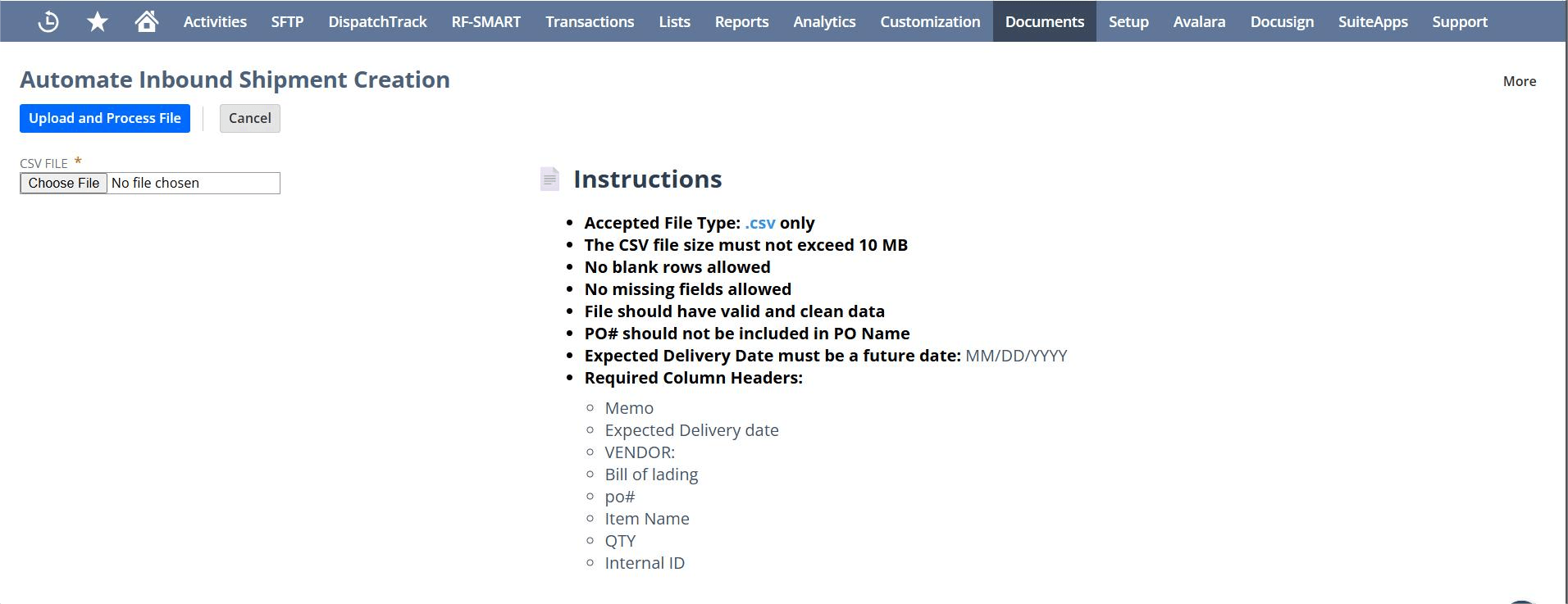
Automate Inbound Shipment with CSV Upload
The Inbound Shipment Automation feature transforms the manual, error-prone process of creating inbound shipments in NetSuite into a streamlined, automated workflow. By allowing users to upload vendor-provided shipment details through a simple interface, the system handles validations, resolves duplicates, and automatically creates Inbound Shipment records, saving time and reducing errors.
Effortless Shipment Processing with Intelligent Automation
Upload vendor-provided spreadsheets through a guided interface, eliminating the need for manual record creation.
The system checks each entry for accuracy, ensuring vendors, items, and shipment details match existing records before processing.
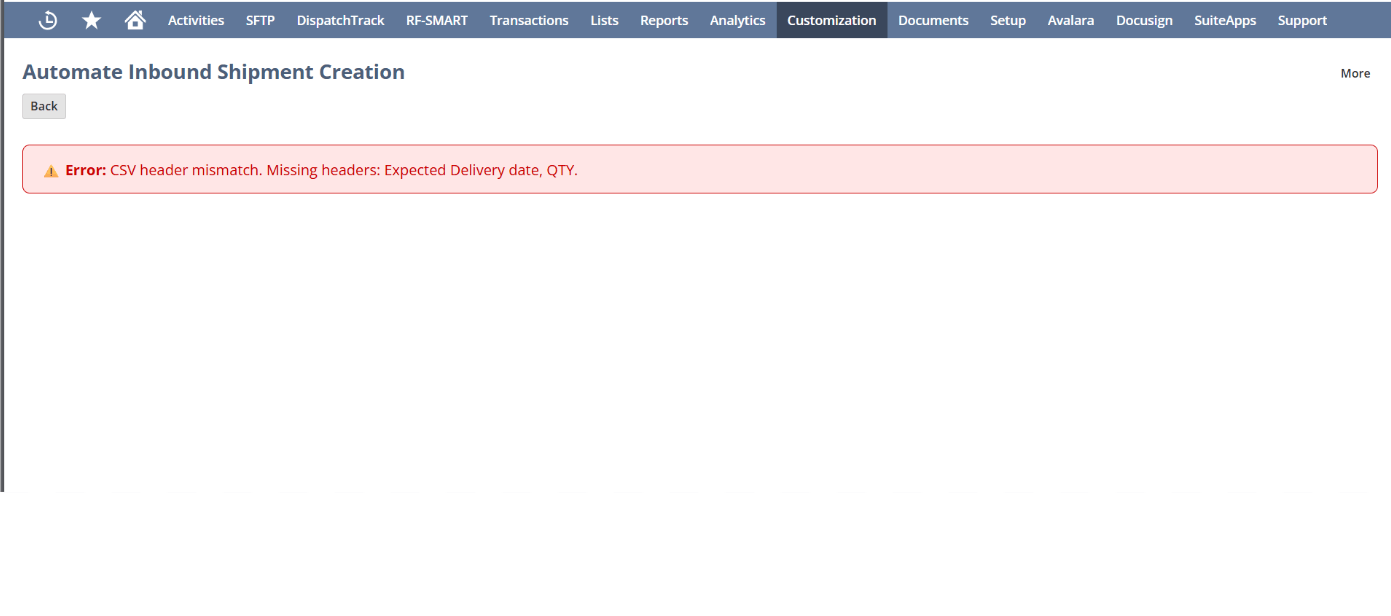
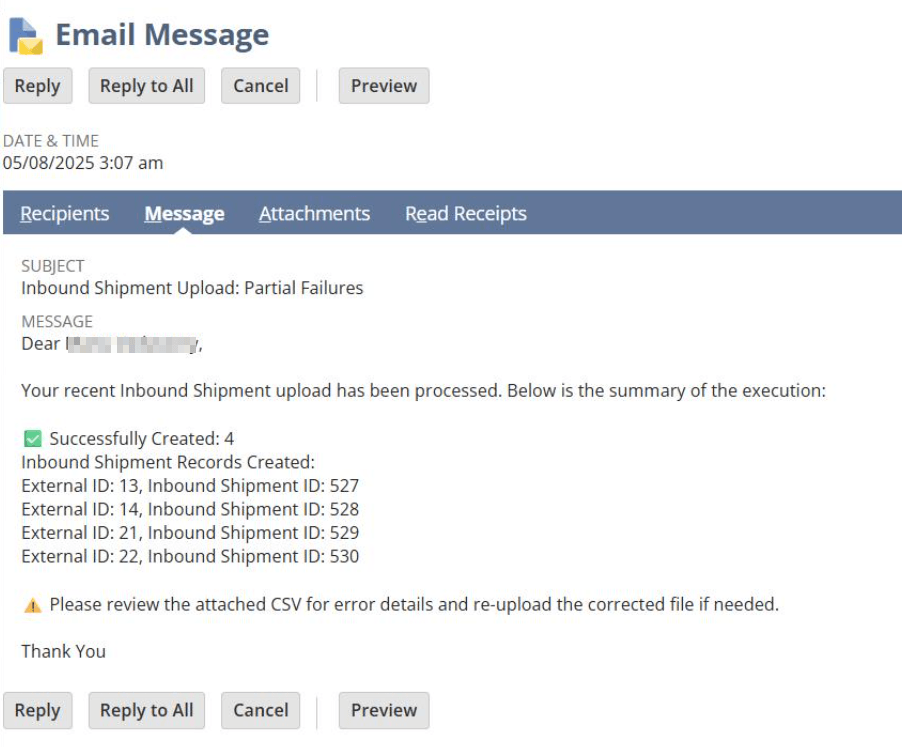
Detailed error messages and automatic email alerts help users quickly correct any issues with the uploaded file.
Successfully validated shipments are automatically created in NetSuite.
Inbound shipment records are automatically created from purchase orders and related transactions, reducing manual data entry and ensuring consistency across procurement, logistics, and inventory workflows.
All inbound shipments are managed from a single, centralized view, giving teams real-time visibility into shipment status, quantities, and expected arrivals across suppliers, locations, and warehouses.
Freight, duties, insurance, and other additional costs are automatically captured and allocated to inventory, ensuring accurate landed cost calculations and compliant financial reporting.
Warehouse teams can receive shipments using mobile devices, enabling faster processing, barcode scanning, and real-time inventory updates at the point of receipt.
Shipments can be tracked at the container level, supporting better coordination with freight forwarders and logistics partners while improving predictability for warehouse planning.
Inbound inventory can be pre-allocated to demand sources such as sales orders, projects, or production requirements, helping ensure availability for priority commitments.
Supports ownership changes during transit, enabling accurate inventory and financial recognition for intercompany transactions, drop shipments, and multi-entity operations.
Inbound shipment processes are fully integrated with procurement, inventory, finance, and
Setup & Configuration Requirements
- The file must be in CSV format.
- Only authorized employees with the necessary NetSuite permissions can use the upload interface.
- The Inbound Shipment Management feature must be enabled in NetSuite.
- All fields in the file are required to be completed with accurate and valid information.
- The header format must remain consistent to ensure successful processing.
- This process supports partial shipments.
Why Choose Inbound Shipment Automation?
- Reduces manual work of creating inbound shipments
- Processes large shipment data quickly and efficiently
- Automatically validates shipment details against existing records
- Eliminates duplicate errors and mismatched data
- Simple upload process for vendor spreadsheets
- Clear error notifications and success confirmations
- Supports growing shipment volumes without additional manual work
- Ensures consistent handling for partial or full shipments
Automation eliminates repetitive data entry, manual reconciliations, and fragmented tracking, allowing teams to focus on higher-value operational and strategic tasks.
Real-time insight into inbound shipments, container movements, and inventory availability enables better planning, faster decision-making, and improved coordination across departments.
Accurate landed cost allocation and integrated financial workflows simplify vendor billing, cost reconciliation, and accounting processes, reducing delays and errors.
Frequently Asked Questions
Yes, partial shipments are supported and processed automatically based on the uploaded data.
No manual adjustments are required if the vendor spreadsheet follows the predefined format shared with them.
The system provides detailed error messages and sends an email with a summary, so users can quickly correct the file.
Yes, you will receive an automatic email confirming successful record creation with a summary of the shipments.
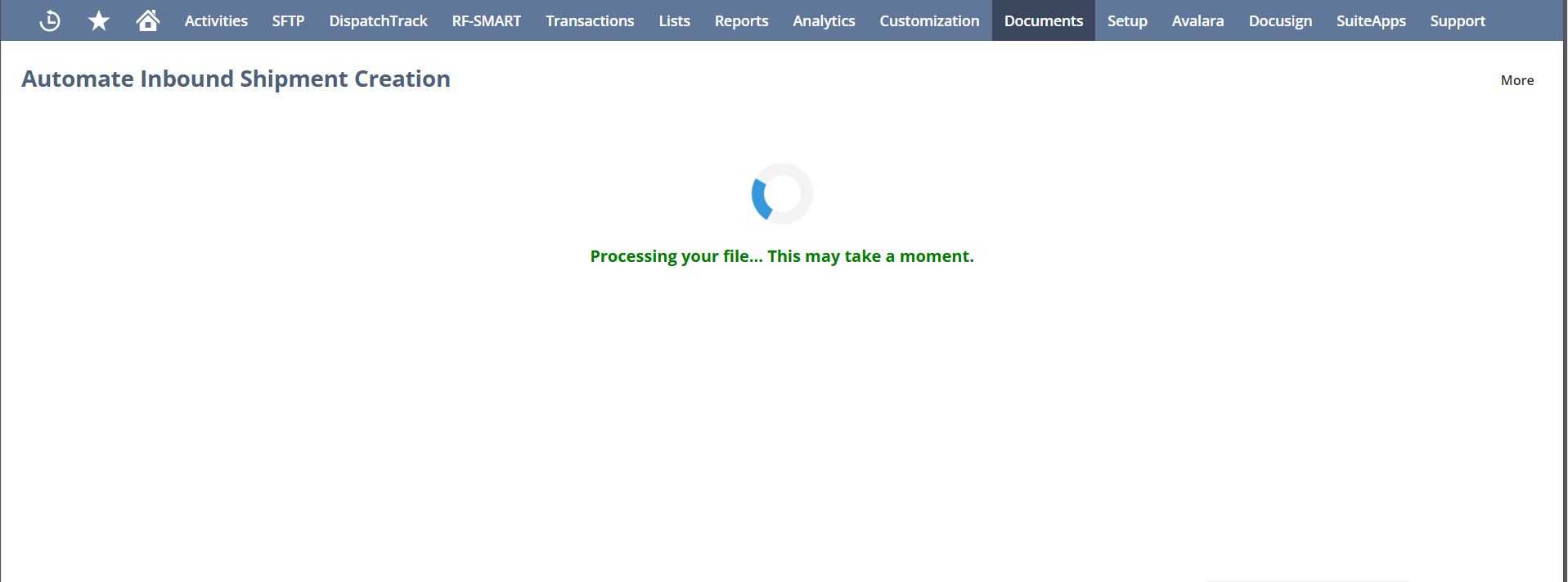
The page displays proper message upon completion and redirects to a report displaying the list of Inbound Shipments created that day.
Inbound Shipment Automation supports international logistics by managing container tracking, landed cost allocation, multi-currency transactions, and compliance-related cost components such as duties and freight. This enables consistent control and visibility across both domestic and international inbound operations.
Shipments can be tracked through centralized dashboards and integrated workflows that provide real-time status updates, container-level visibility, and location-based tracking across the inbound lifecycle, from supplier dispatch to warehouse receipt.