

Empowering financial services with NetSuite solutions
Enhance agility, compliance, and innovation in finance.
We leverage NetSuite to unify financial services operations, enhance financial management, ensure compliance tracking, and boost customer relations for streamlined processes.

Challenges in the Finance Industry
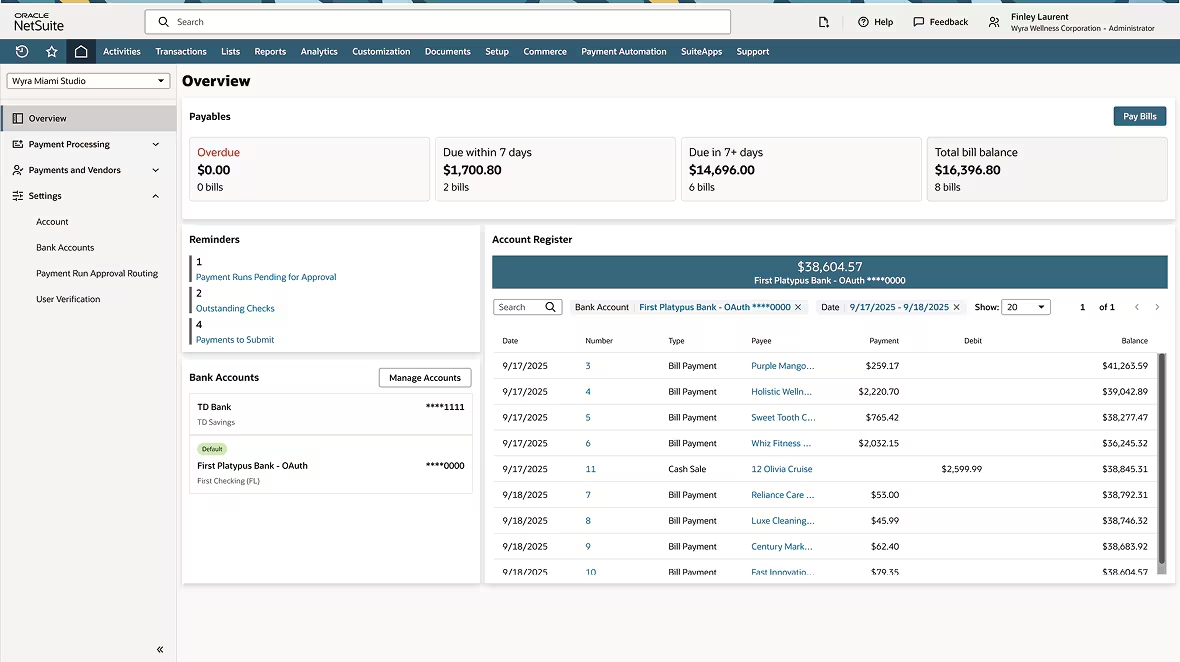
- Operational inefficiencies due to manual processes
Spreadsheet-driven workflows slow down reconciliations and approvals, and errors build up across reporting periods.
- Risk management complexities
Identifying and responding to credit, operational, and market risks requires structured processes that most disconnected systems cannot provide.
- Multi-subsidiary and multi-entity complexity
Managing multiple legal entities across currencies and jurisdictions is difficult to keep consistent when done through manual coordination.
- Data fragmentation across the system
When financial data is spread across multiple platforms, reconciliation cycles lengthen and reporting accuracy becomes difficult to maintain.
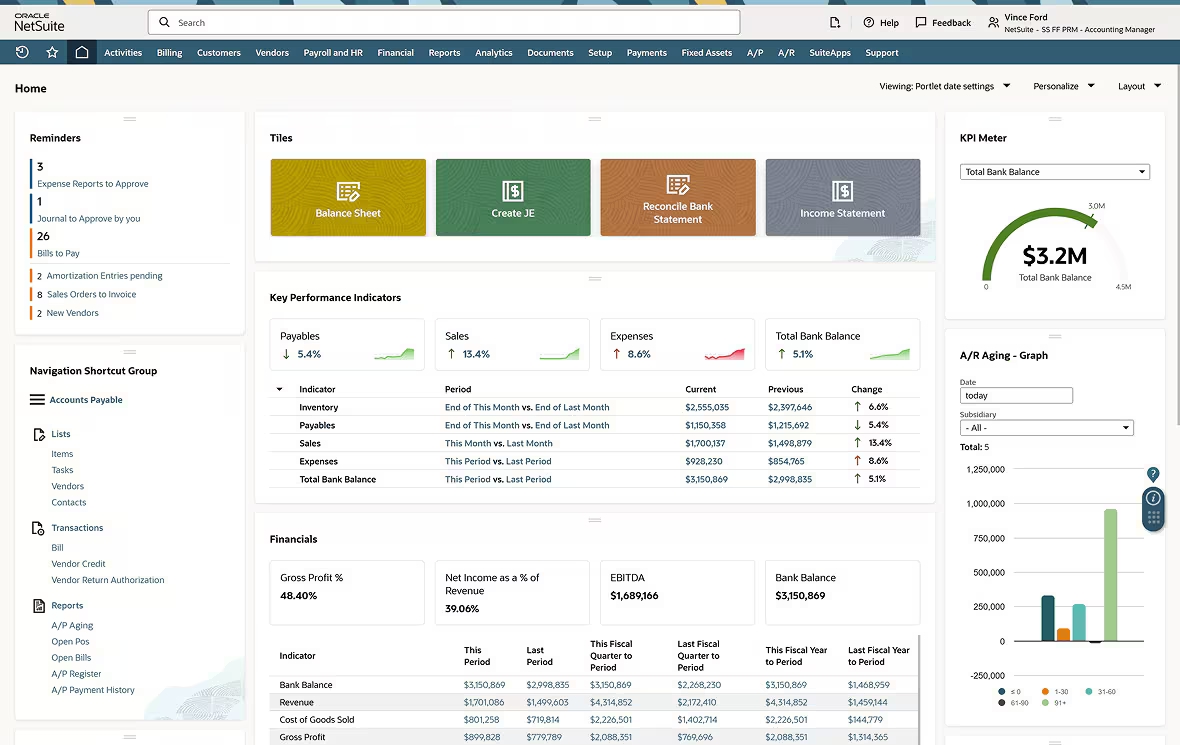
- Revenue recognition compliance
Staying compliant with ASC 606 and IFRS 15 across complex contracts and billing arrangements is hard to manage without automation.
- Multi-book accounting and statutory reporting
Keeping management, tax, and statutory books consistent with each other is difficult to sustain without a system built for it.
- Intercompany eliminations and consolidation complexity
Eliminating intercompany transactions and producing a clean consolidated view takes significant time when done outside a unified system.
- Audit trail and financial governance requirements
Every transaction and adjustment needs a documented record that can be produced quickly without rebuilding history from scratch.
Benefits of Using NetSuite for the Finance Industry
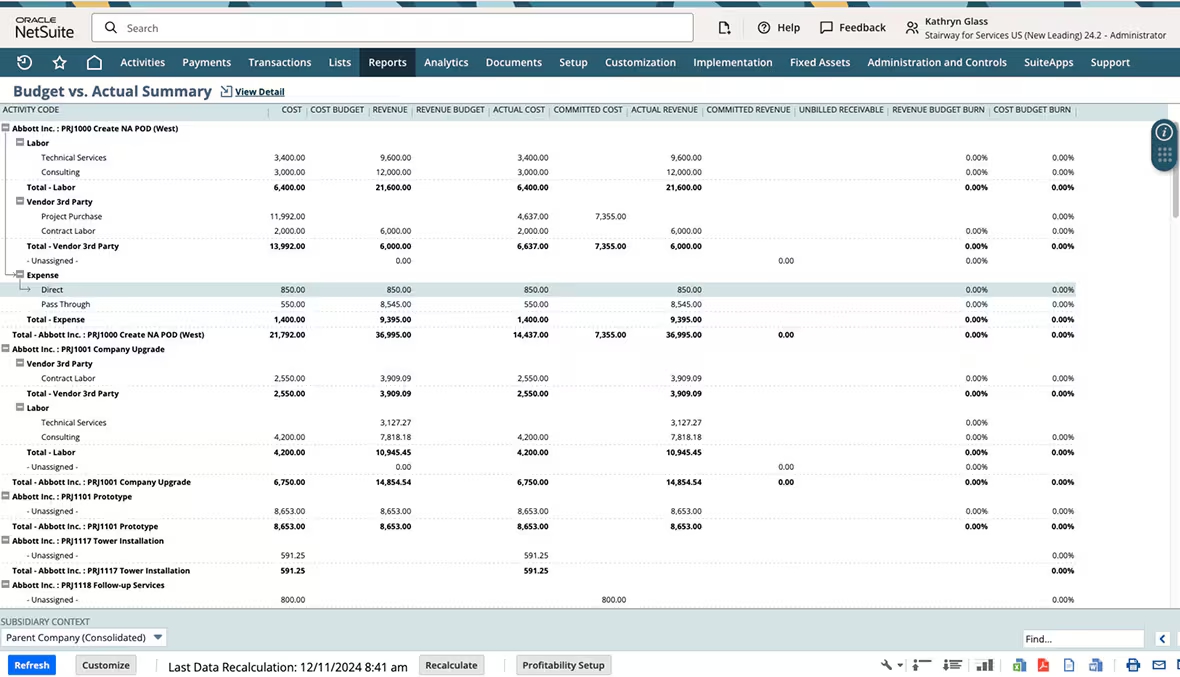
- Improved financial accuracy and transparency
Finance teams work from a single source of truth. This cuts down on errors that affect reporting confidence.
- Faster and more reliable reporting
Period-end reports are produced in less time. Leadership gets data they can act on without manual verification.
- Better regulatory compliance and reduced risk
Financial governance is built into the system, not managed around it. Compliance gaps are easier to catch and close.
- Increased operational efficiency
Finance teams spend less time on reconciliations and manual tasks, freeing capacity for higher-value analysis and strategic decision-making.
- Scalable financial operations across entities
As the business grows across geographies and entities, financial operations keep up. No extra complexity or additional headcount required.
- Data-driven decision-making
Leadership gets a clear financial picture when it matters most. Opportunities and risks can be addressed before they grow.
- Cloud-based financial control with real-time access
Accurate numbers are accessible from anywhere at any time. Financial control stays intact regardless of where the business operates.
- Strong reporting and analytics capabilities
Custom reports and dashboards are easy to build and share. Finance and leadership stay aligned on performance across every function.
- Faster financial close cycles
The record-to-report process gets shorter when close and consolidation happen in one place. Teams spend less time chasing data across systems.
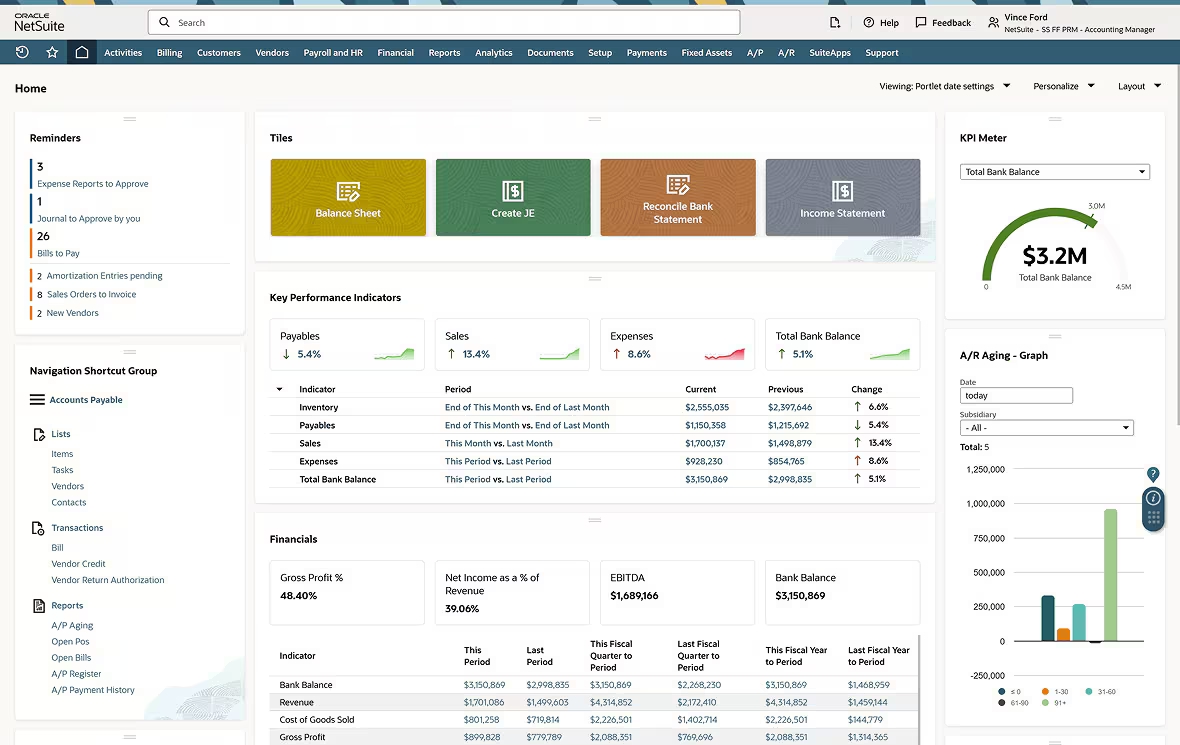
- Automated revenue recognition
ASC 606 and IFRS 15 compliance is maintained consistently across contracts. Manual effort and the risk of misstatement are significantly reduced.
- Real-time cash flow visibility
Accurate cash positions across entities and currencies are always available. No waiting on manual updates or end-of-day reports.
- Scalable multi-entity consolidation
Intercompany eliminations, currency conversions, and statutory reporting are handled automatically. The process stays manageable as the entity structure grows.
- Audit-ready financial data transparency
Every transaction has a complete audit trail attached to it. Governance requirements are met without scrambling at the last minute.
Core NetSuite Capabilities for Finance Teams
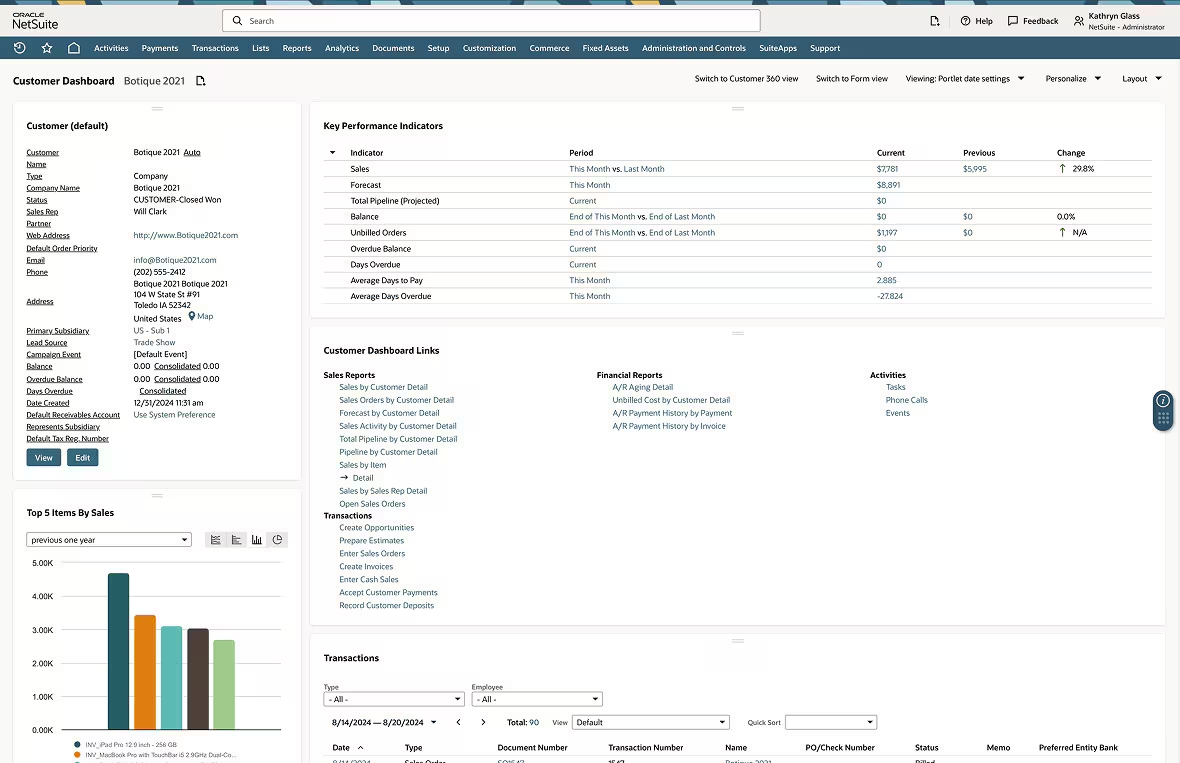
- Financial Management
Manage accounting, financial close, consolidation, and compliance from a single platform built for finance teams operating at any scale.
- Budgeting, Forecasting and Planning
Build accurate budgets and rolling forecasts using real-time financial data, giving leadership a reliable basis for business decisions.
- Customer Relationship Management (CRM)
Connect sales pipeline and customer data directly to financial operations, giving finance teams visibility into revenue before it hits the books.
- Revenue Management
Automate revenue recognition across complex contract structures and billing models while staying compliant with ASC 606 and IFRS 15 standards.
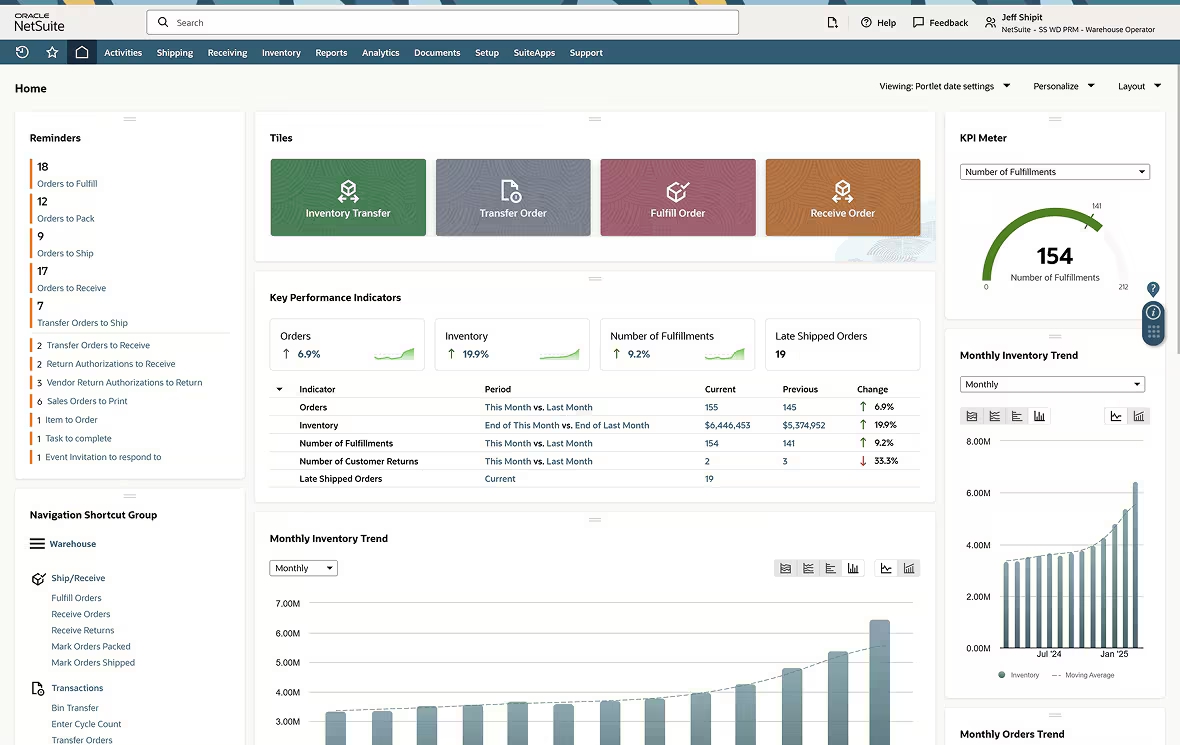
- Human Capital Management (HCM)
Align workforce costs with financial planning by managing payroll, headcount, and HR data within the same connected environment.
- Procurement
Control spending from purchase order through payment, with full visibility into commitments and liabilities before they impact the financial position.
- Business Intelligence (BI)
Turn financial and operational data into actionable insights through real-time dashboards and reports built for finance and leadership teams.
- Global Business Management
Manage multiple entities, currencies, tax frameworks, and statutory reporting requirements from one platform as the business expands internationally.
Comprehensive financial ERP solutions


Case studies: success stories with proven results


Automate Financial Workflows with NetSuite-ICICI Bank Integration


Dynamic Graphical Reports for Customer Sales in NetSuite


All About Migration from QuickBooks & ZohoBooks to NetSuite ERP
Key advantages of NetSuite for financial services
- Timely Information and Insight


Improve business performance with real-time metrics and role-based dashboards, facilitating quick and informed decisions.
- Accelerated Financial Course

Streamline the financial close process while maintaining compliance with applicable accounting standards, reducing time and errors.
- Streamlined Back Office Operations

Eliminate errors with automated processes, reducing reliance on spreadsheets and enhancing operational efficiency.
- Enhanced Customer Relationships

Obtain a 360-degree view of customers, including sales, support cases, and financial transactions, improving service and satisfaction.



Experience unparalleled business excellence.


Frequently asked questions
Still have questions?
Drop us a message and we will get back to you.
NetSuite's Advanced Revenue Management (ARM) module supports ASC 606 compliance by automating revenue recognition based on performance obligations, contract terms, and delivery milestones. It handles multi-element arrangements and reduces manual effort, though proper configuration and periodic accountant review are still necessary to maintain full compliance.
Yes, NetSuite can integrate with legacy banking systems, though the complexity depends on the specific system. Most integrations are handled through middleware tools like Celigo or Boomi, or via file-based methods such as BAI2 and SFTP. A technical assessment is recommended before implementation.
Tax calculations are handled automatically across different regions and jurisdictions. Avalara integration is also available for more detailed tax compliance needs.
It supports one-time, recurring, milestone, usage-based, and subscription billing. Both simple and complex billing structures are covered.
Access controls, audit trails, and data encryption are built into the system. It also meets SOC 1 and SOC 2 compliance standards.
Yes. It covers fund accounting, project finance, and intercompany transactions. Additional modules are available for more specific requirements.
The period-end close process is managed through automated tasks, journal entries, and reconciliation workflows. Progress is tracked in real time across all entities.
Financials across subsidiaries are consolidated automatically. Currency conversions, intercompany eliminations, and statutory reporting are all taken care of in one place.
Yes, separate books for IFRS, GAAP, and local statutory requirements can be maintained at the same time. A single transaction is recorded once and mapped across all books.
Subscription billing in NetSuite is handled through the SuiteBilling module, which supports pricing models (flat, tiered, consumption-based), automated invoicing, renewals, and mid-term adjustments with automatic proration. Revenue recognition is managed separately via the Advanced Revenue Management (ARM) module, which generates schedules compliant with ASC 606 and IFRS 15, allowing revenue to be recognized differently from when the customer is billed.
Still have questions?
Drop us a message and we will get back to you.